
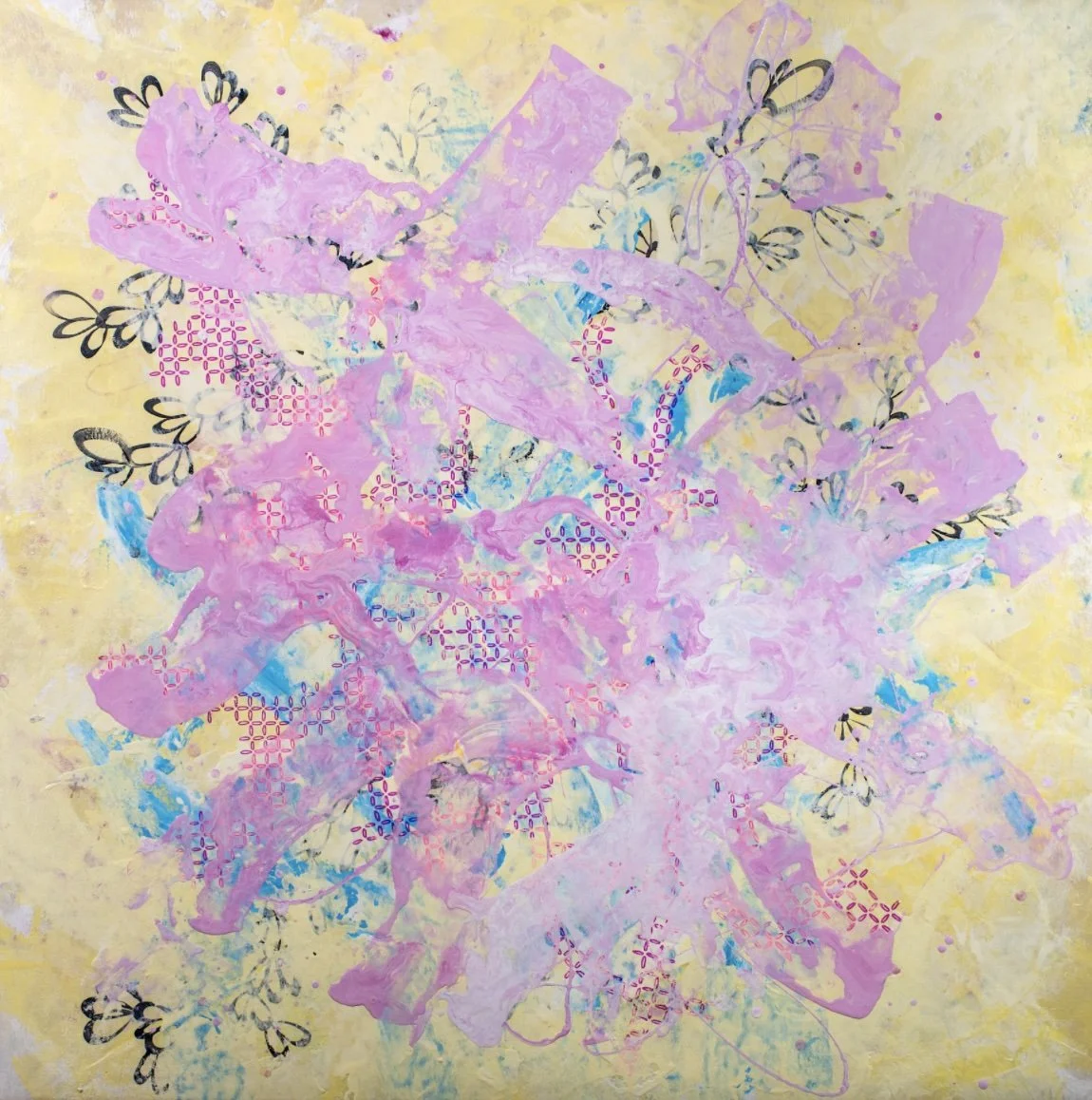
Ocean in a drop: “Building to the Crescendo” by Cate McQuaid (2025)
MIT Technology Review: Artist and Roboticist Blends Art and Science to Create Balanced Chaos (2025)
2025 Interview by Lauren Boysa
Blake Brasher’s childhood, shaped by constant relocation due to his father’s career, created an early sense of instability and a deep connection to nature. Born in Oklahoma City, he spent his formative years in Alaska, Turkey, and Arizona. These shifts—from rural environments to highly structured air force bases—left a lasting impact on Brasher’s emotional landscape and later art. "The experience of being in a rural environment, where you're in nature and only have a connection to civilization, is very different from being in civilization with access to nature," he reflects.
The themes of space, movement, and isolation—both physical and mental—echo throughout his work. Brasher was always drawn to art, but it wasn’t initially a career path for him. "Painting was just something to do as a kid," he recalls, "It wasn’t until later that I understood it could be a career." Brasher eventually found his way to MIT, where he studied Visual Arts while also exploring the technological and mechanical aspects of his work. "I was always good at math and science, but I ran out of advanced classes, so I started thinking about what else there was," he explains. His interest in both the logical and creative worlds led him to paint at MIT, despite its reputation as a STEM-focused institution. "MIT didn’t have painting classes, but they had a cross program with Harvard. I would go to Harvard’s Carpenter Center studio to paint, and that was where I really started to immerse myself in painting."
Brasher’s process is rooted in intuition and constant evolution. He combines different mediums—acrylics, oil paints, markers, and collage elements—creating textured, layered works. “I tend to start with automatic, almost mindless patterns like grids or vines,” he shares. "Grids symbolize order, structure, the digital world. The vine patterns, however, feel more organic—like life itself, unpredictable and natural." These contrasting forms allow Brasher to create an ongoing dialogue between chaos and structure, the two forces he perceives constantly at play in life.
The tactile nature of his work is especially important to Brasher. "I like using raw, unstretched canvas because the composition wraps around the stretcher bars, reinforcing painting as an object, not just an image," he explains. This approach challenges the viewer's expectations, inviting them into a more immersive experience. "In the age of digital art and AI, the tactile experience of a handmade painting becomes even more significant," he notes. "It’s something you have to experience in person—something that can’t be replicated."
Throughout his career, Brasher’s work has evolved, but certain themes have remained constant. “When I look back, even when I was doing figurative work, I was always doing abstract warm-ups—color studies, blocking in. It’s about color and composition, the lines that hold everything together,” he reflects. Over the years, this focus has become more refined, shifting toward an ongoing exploration of space and texture.
His use of collage elements and song lyrics also plays a significant role in his work. “I listen to music or podcasts while I paint, and they influence the mood of the pieces,” Brasher says. “Titles are like entry points into the work. They help set the mood for the viewer, like a suggestion to approach the painting in a particular way.” These titles offer a glimpse into the mood and themes that drive his work.
Blake Brasher’s paintings invite contemplation and conversation. With each piece, he continues to explore the balance between raw emotion and ordered thought, much like his own upbringing, where he was constantly adapting to new environments. "It’s like I’m perpetually seeking balance," he says, acknowledging how his experiences shaped the emotional landscape that informs his work. Through his intricate use of materials and abstraction, Brasher’s paintings offer a space for viewers to reflect on both the chaos and order of life, creating a dialogue between the internal and external worlds.